Mummies' Return.
Concept · never mintedA generative PFP collection from the height of the 2021 NFT moment — 5,555 hand-illustrated Egyptian mummies, 75+ traits, released CC0. I drew every character, built the trait system the collection was generated from, and designed the single-page mint and brand site. It was ready to launch; it never did. This is the work, and what I'd keep from it.
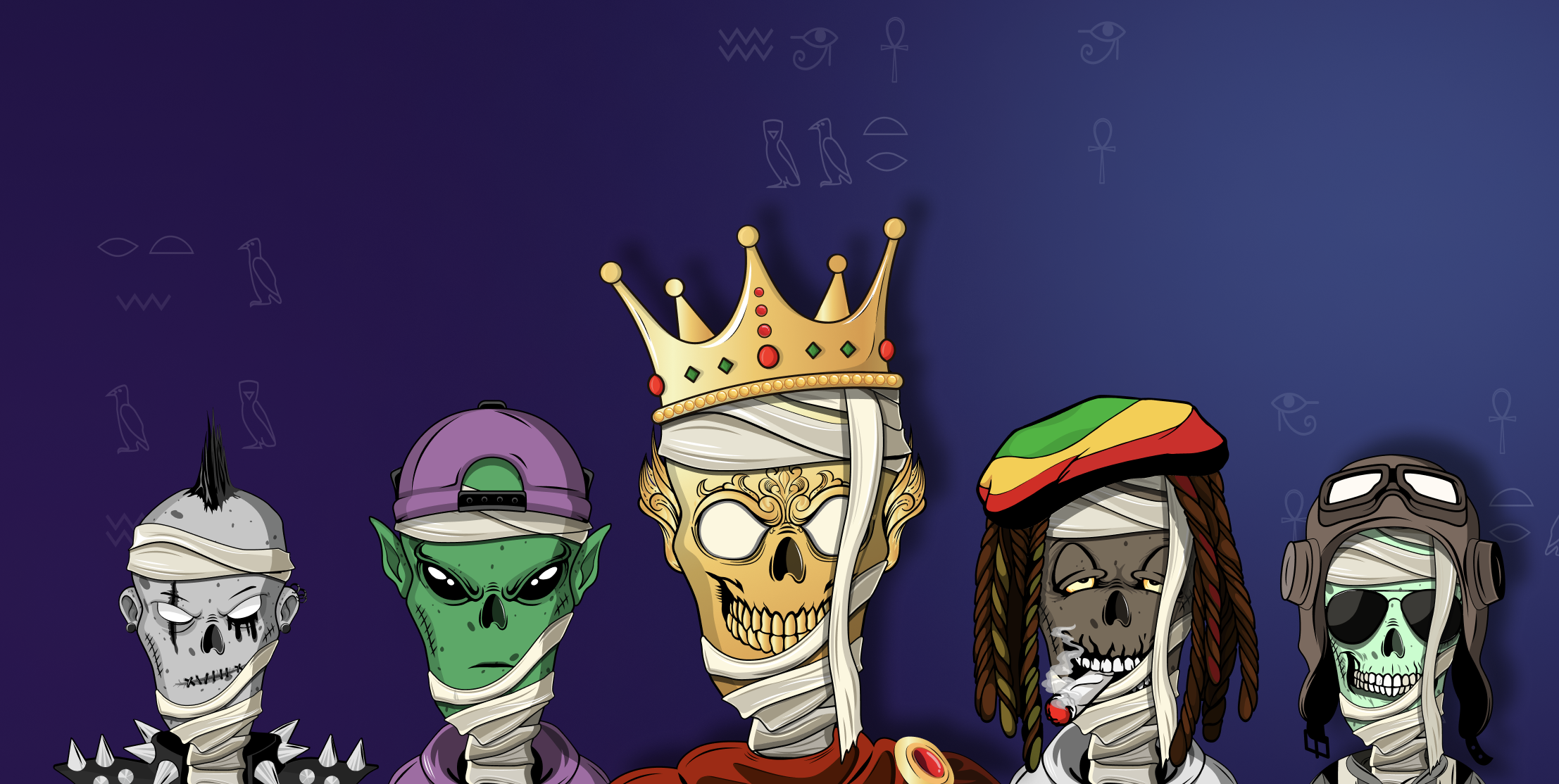
A PFP collection, built at the peak of the moment.
In 2021 the generative profile-picture collection was the format everyone was reaching for — 5,000-odd characters, assembled from a library of traits, sold as a mint and held as an identity. Most of them looked the same: same grid, same rarity charts, same promises. The interesting ones had a point of view before they had a roadmap.
Mummies' Return was an attempt at exactly that — a collection with a clear character and a low-ego pitch. The idea was simple and a little self-aware: a fam of cartoon Egyptian mummies, “being mummies by ourselves,” building the comfiest corner of the space. Hand-drawn, a bit grotesque, a bit funny, and released CC0 so anyone could build on the art. I owned it end-to-end — the illustration, the trait system it was generated from, the brand, and the site you'd mint from.
A PFP project lives or dies on its art and its first screen. The characters have to be worth 5,555 variations, and the landing page has one job: make a stranger want to be one of them.
What I designed.
I was the only designer on it, so the whole thing — from the first pencil sketch to the mint button — was mine to figure out.
- The characters — every mummy, hand-illustrated: the base heads, the wrap styles, and the personality traits that make one mummy a crowned king and the next a goggled aviator.
- The trait system — 10 base mummies, each customisable across six layers (head, eyes, mouth, jacket, ears, and color) so thousands of unique, coherent mummies could be generated without any of them looking broken.
- The brand — the bubbly wordmark, the deep-purple tomb world, the hieroglyph texture, and the Egyptian motifs (the pharaoh sarcophagus, the torches) that tie it together.
- The landing & mint page — a single scrolling page: the hero, the mint scene, the collection story, a main-mummies showcase, the team, and an FAQ.
The collection was finished and the page was built. It was a complete, mint-ready project — it just never went to market.
5,555 mummies, drawn to be worth holding.
The art had to carry everything. Each mummy starts from a hand-illustrated skull-and-wrap base, then takes on a personality through traits — a king's crown, a rasta cap, aviator goggles, a pirate hat, neon shades, a viking helmet. The line work is deliberately rough and cartoonish, the expressions a little gross, so the collection reads as fun rather than precious. Every piece sits on its own soft gradient tile, which keeps a grid of them looking like a cast, not a spreadsheet.
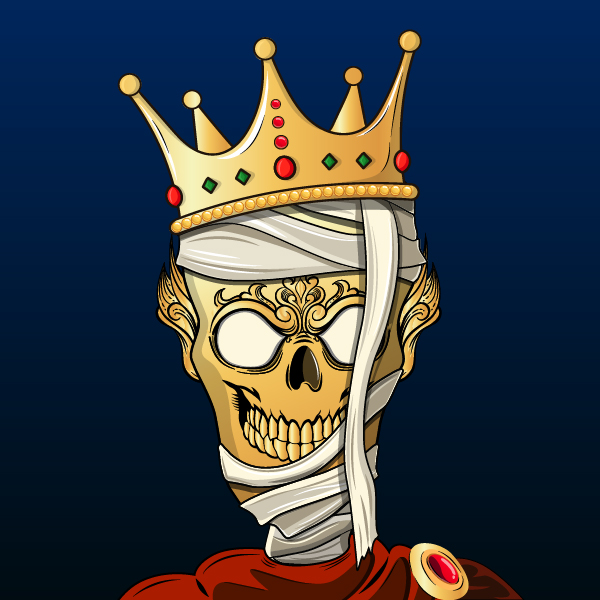
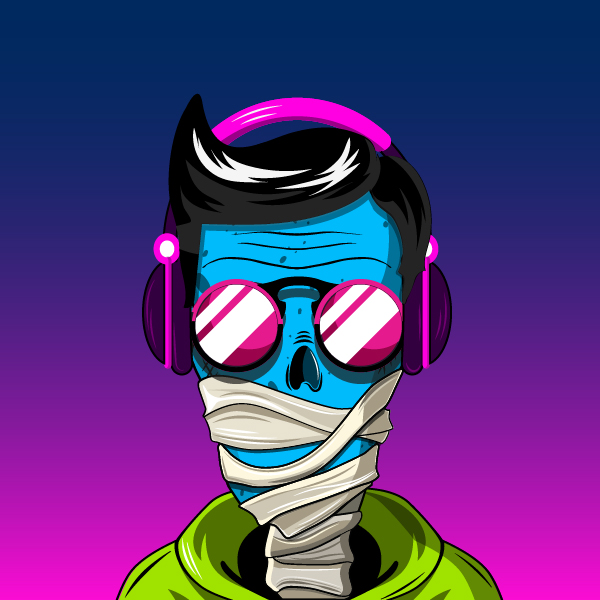
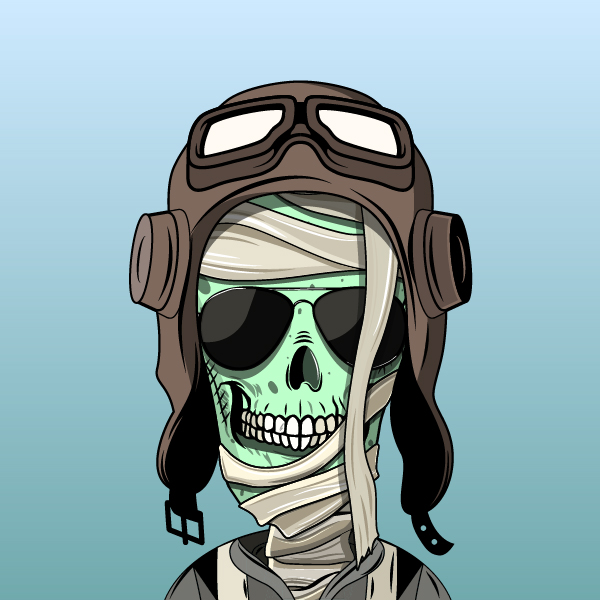
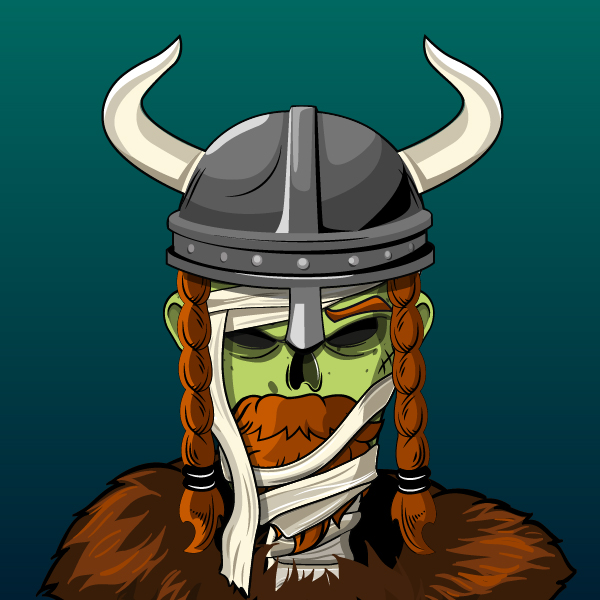
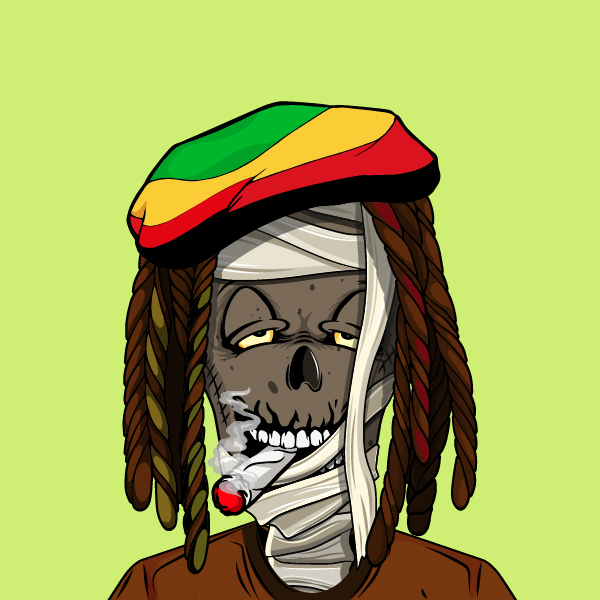
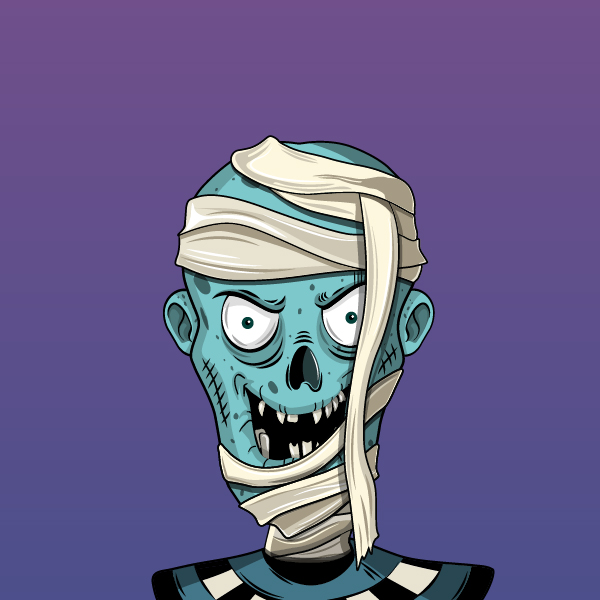
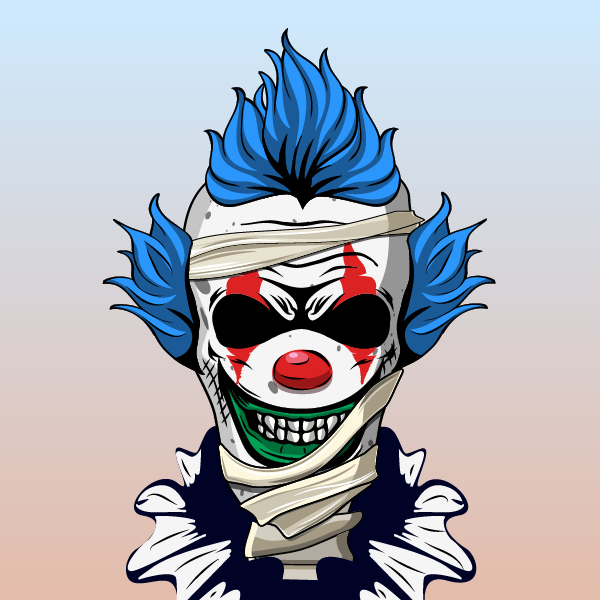
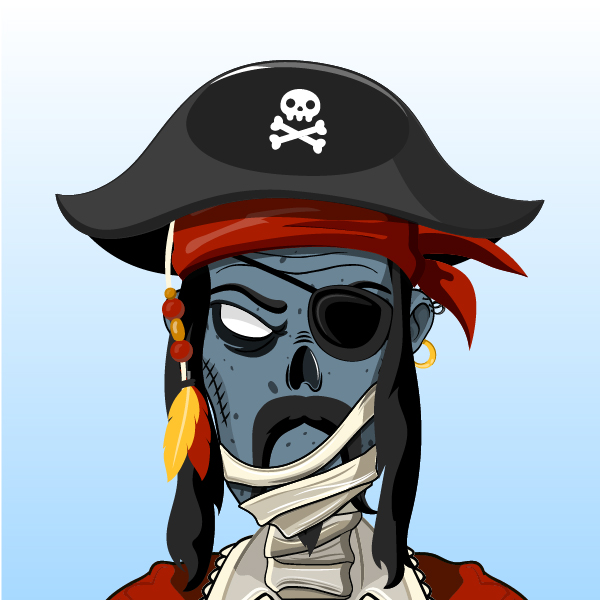
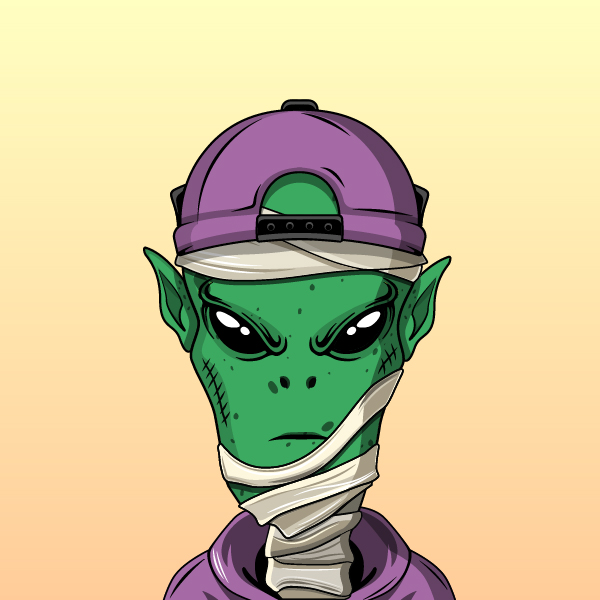
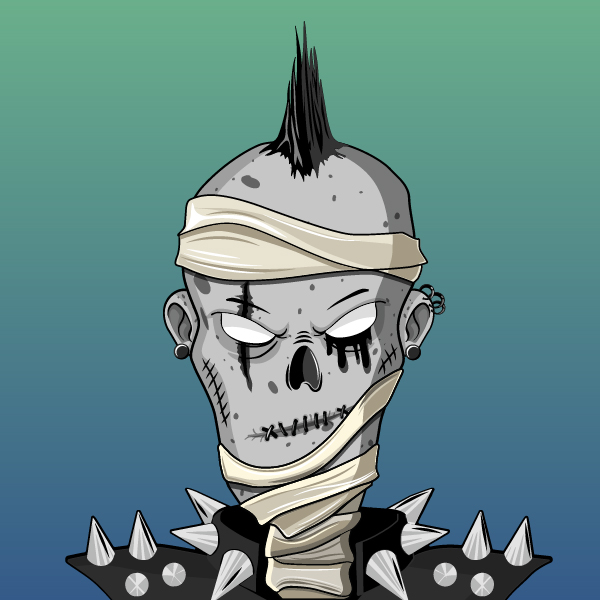
Ten of the collection at full resolution — king, rasta, cyberpunk, viking, pirate, aviator, alien, clown, punk, and zombie. Each is one rendered combination of the trait layers; the personality lives entirely in how the parts stack.
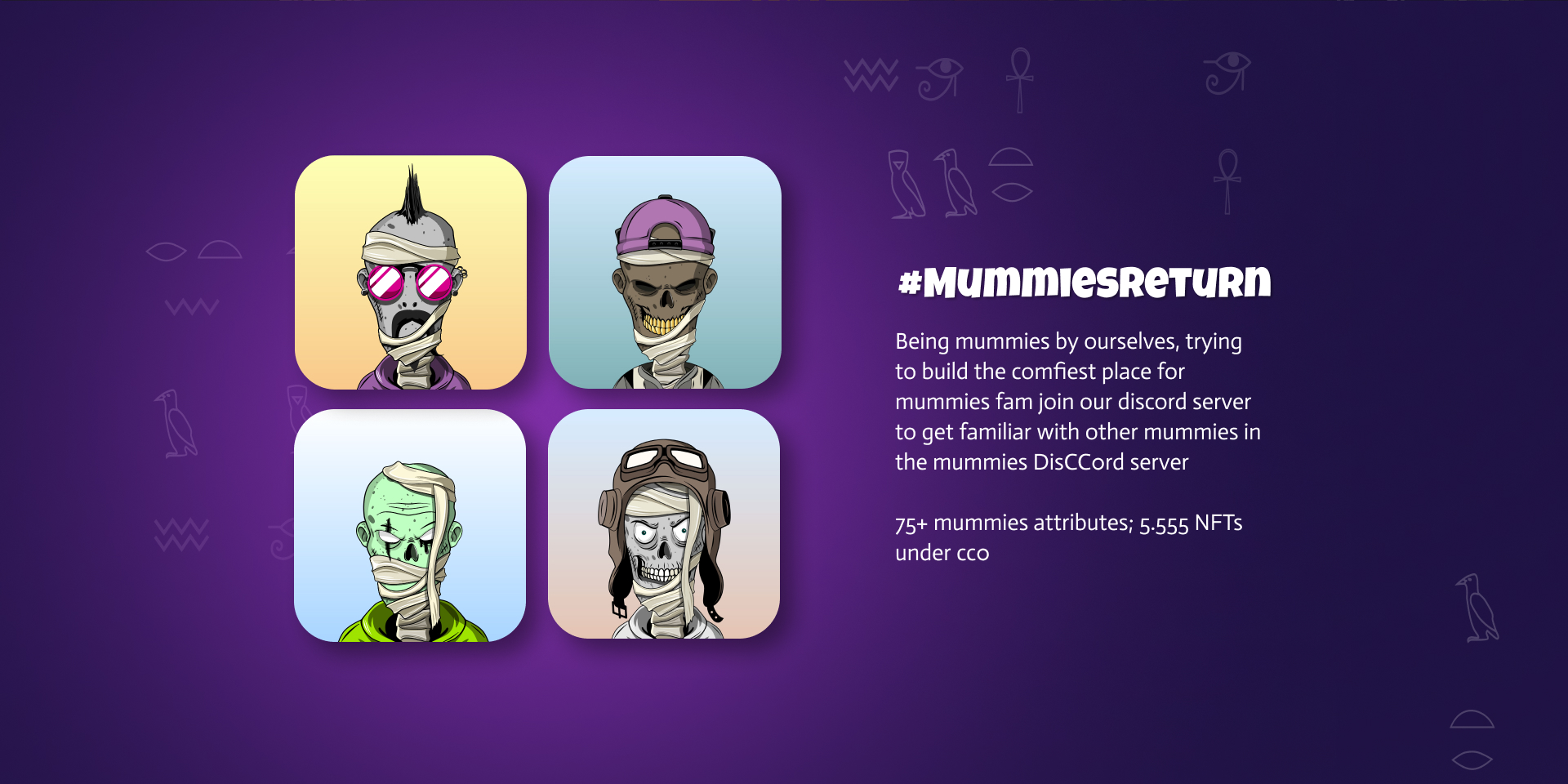
The collection's own pitch, on the page — the comfy-community framing on the right, four sample mummies on the left, and the two numbers that define the drop: 75+ attributes, 5,555 pieces, all CC0.
Drawing a cast, not a character.
Generative collections are only as good as their parts list. A single bad combination — a hat that clips through a face, a background that fights the wrap — multiplied across thousands of pieces, and the whole drop looks cheap. So the real design work wasn't the hero mummies; it was the layer system underneath them.
The system starts from 10 base mummies, and each one is built up through six trait layers — head, eyes, mouth, jacket, ears, and color — drawn to register cleanly against every base. That layered combinatorics is what turns 10 characters into 5,555 unique mummies that still each feel intentional. The “main mummies” below are the showpieces — the rarest, most characterful combinations, used on the site to advertise the range.
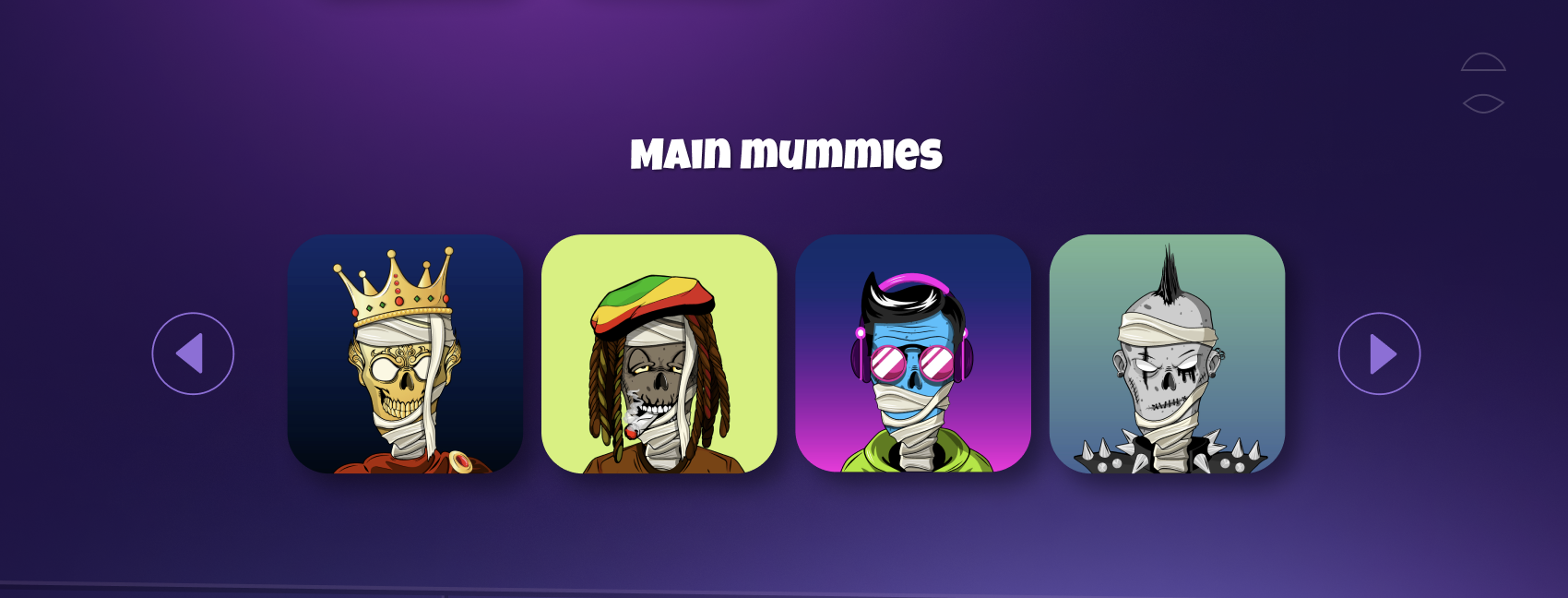
The Main Mummies showcase — the loudest trait combinations, picked to advertise the spread of the collection. A carousel of these is what does the convincing on a PFP page; the king, the rasta, the cyberpunk, and the punk each sell a different reason to want one.
The mint button, as a tomb.
The one screen that matters most on any drop is the one with the mint button on it. Rather than bolt a generic button onto the hero, I made the act of minting part of the world: a golden pharaoh sarcophagus set into the tomb wall, flanked by lit torches, with the Mint button built into its base — as if you're waking a mummy rather than clicking a CTA. A row of characters lines the wall on either side, so the thing you're about to mint is right there next to the button.
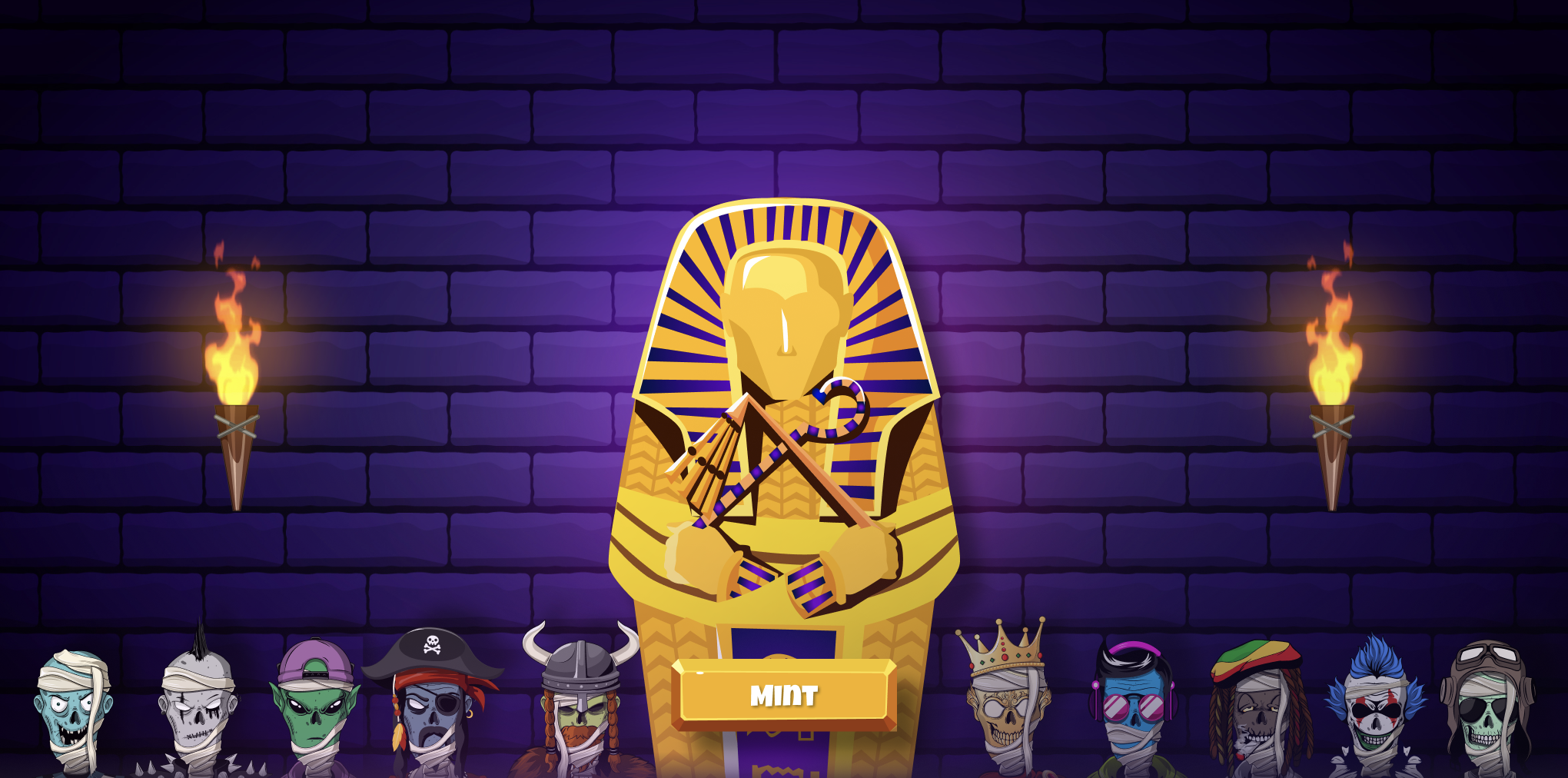
The resting state — the sarcophagus sealed, the Mint button built into its base. Theming the single highest-intent moment in the flow is cheap to do and does a lot of work: it makes the collection's personality the thing you touch, not just the thing you scroll past.
And because minting should feel like an event, the sarcophagus opens on the press — the gold case slides aside and a freshly-wrapped mummy rises out of it. The reveal is the confirmation: you don't get a toast notification, you get a mummy.
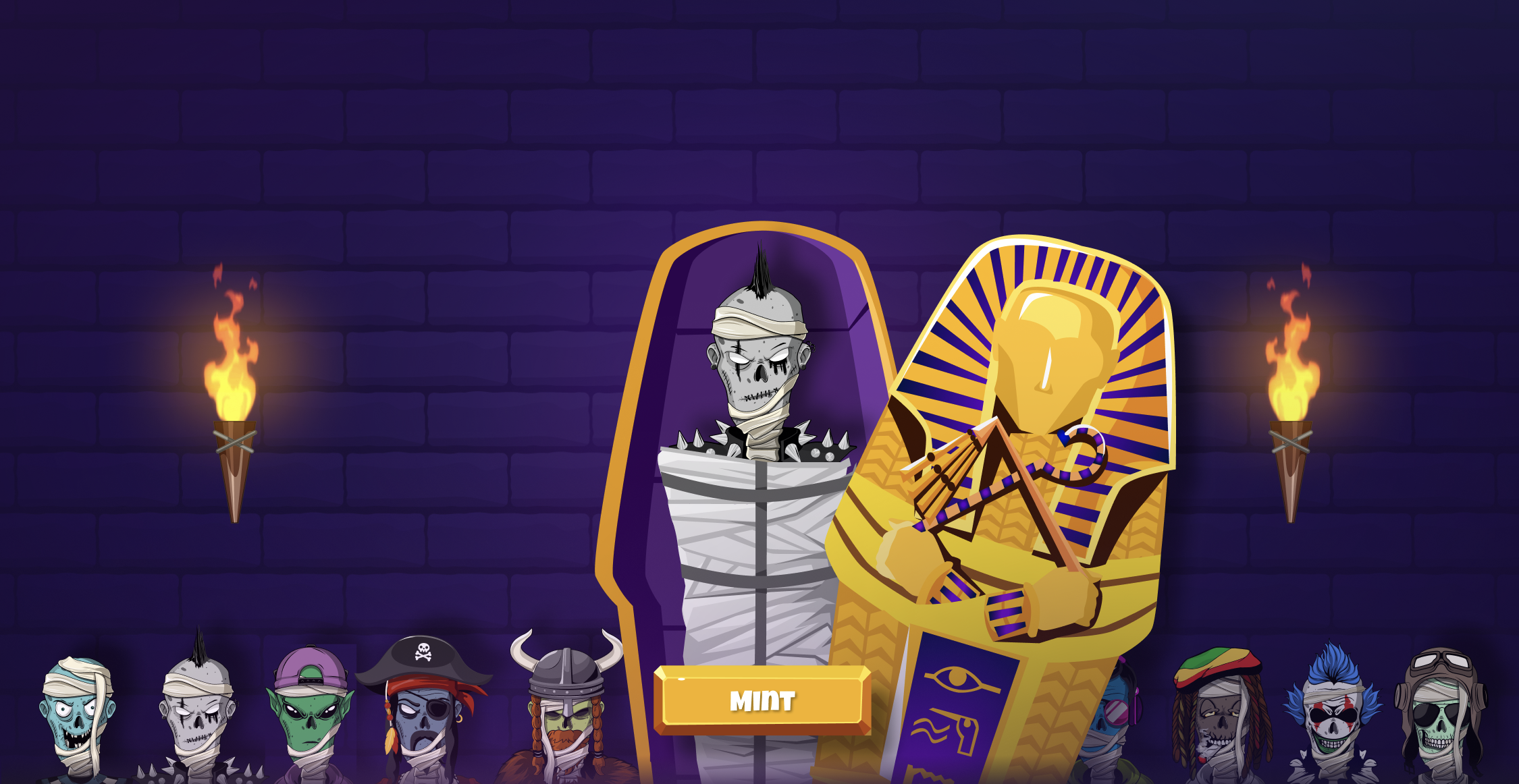
The reveal — pressing Mint opens the tomb and a newly-wrapped mummy emerges. Making the payoff diegetic turns a transaction into a moment worth screenshotting.
One page, top to bottom.
A mint page is a single, well-sequenced argument. Mummies' Return is one continuous scroll: the wordmark and the cast up top, the mint scene as the centerpiece, the comfy-community story and the numbers, the main-mummies showcase, the team, and an FAQ that answers the questions every minter asks — what is it, how many, how much, how many can I mint, which network. The deep-purple tomb world and the hieroglyph texture run the whole length so it reads as one place, not a stack of sections.
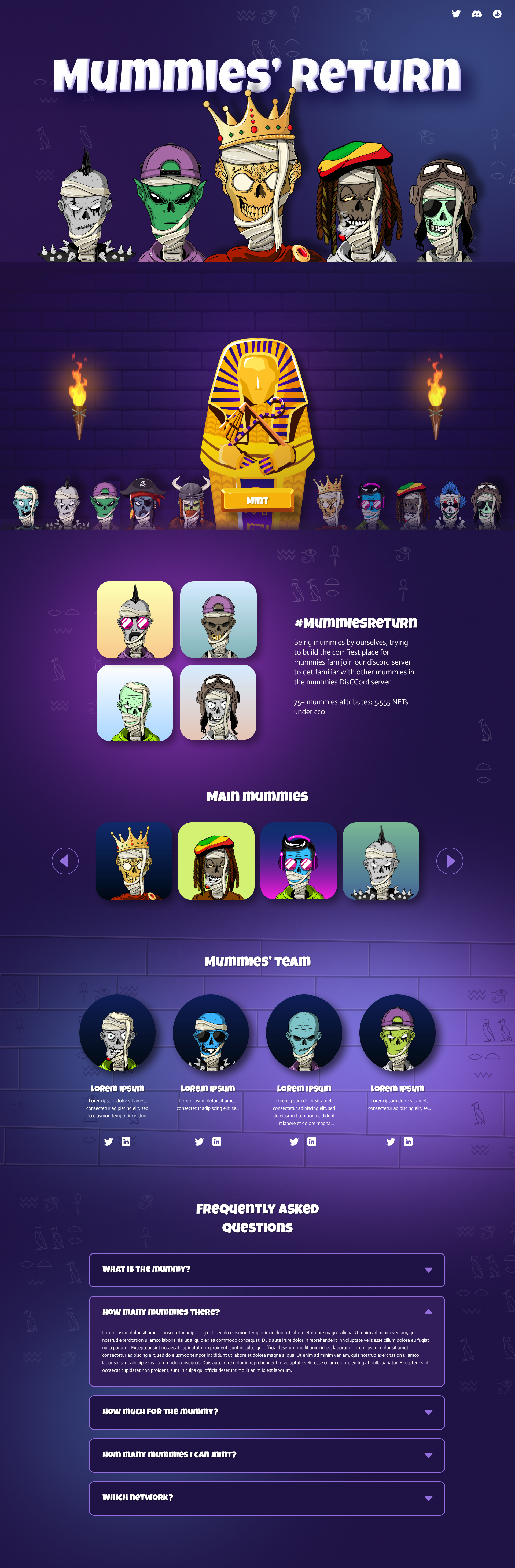
The whole page in one view — every section pulls in the same direction: meet the mummies, mint a mummy, join the mummies. The structure is deliberately familiar; the world it's wrapped in is what makes it Mummies' Return.
The parts that turn buyers into a fam.
The pitch was a community, so the lower half of the page had to deliver on it. A team section puts faces (mummy faces) and social links to the people behind the drop — the honesty signal every 2021 project was judged on — and the FAQ handles the practical anxieties in plain language so nobody has to ask in Discord first.
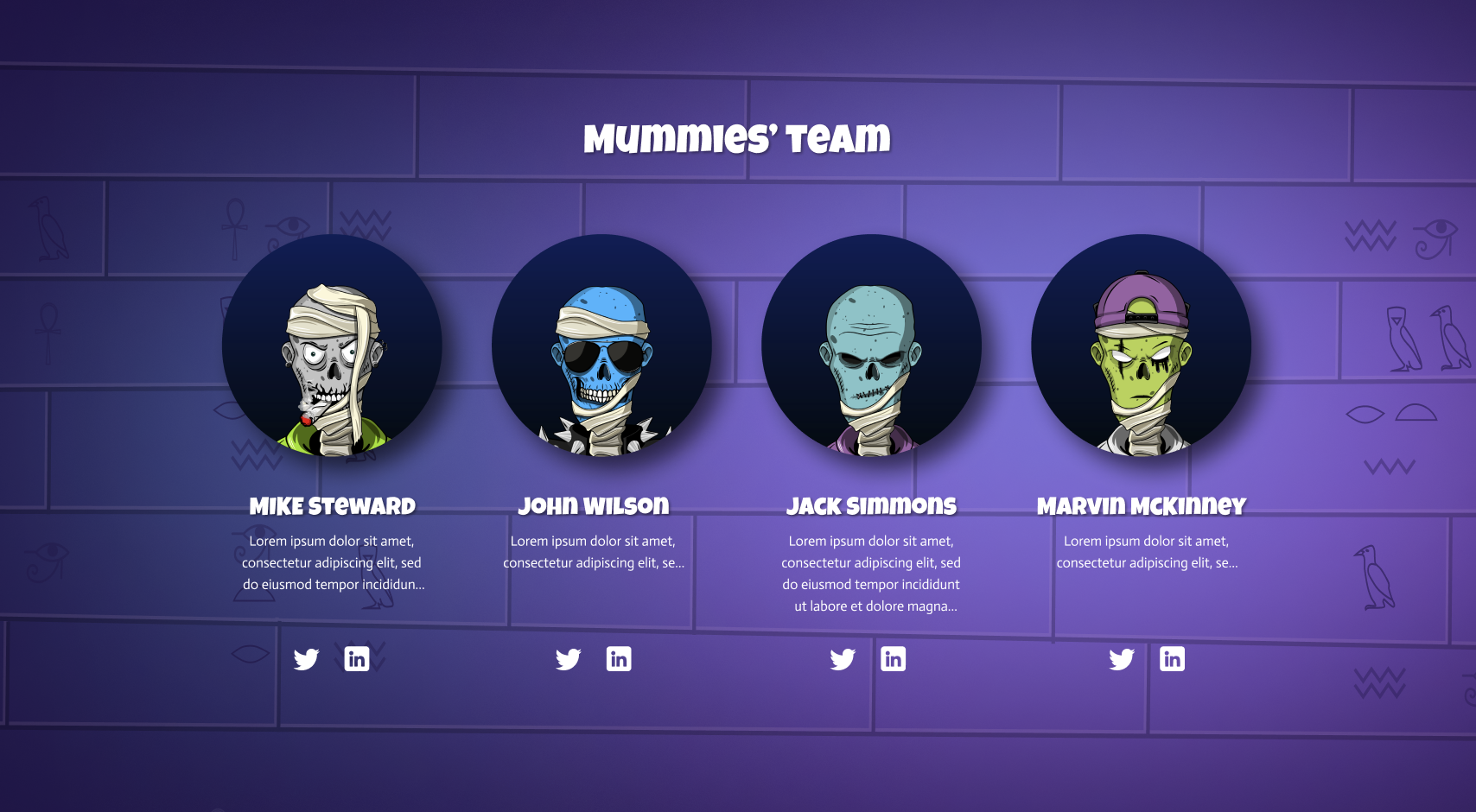
The team row — real names and roles over mummy avatars, each with reachable social links. The pattern is the point: visible people, no anonymity, the honesty signal every 2021 project was judged on.
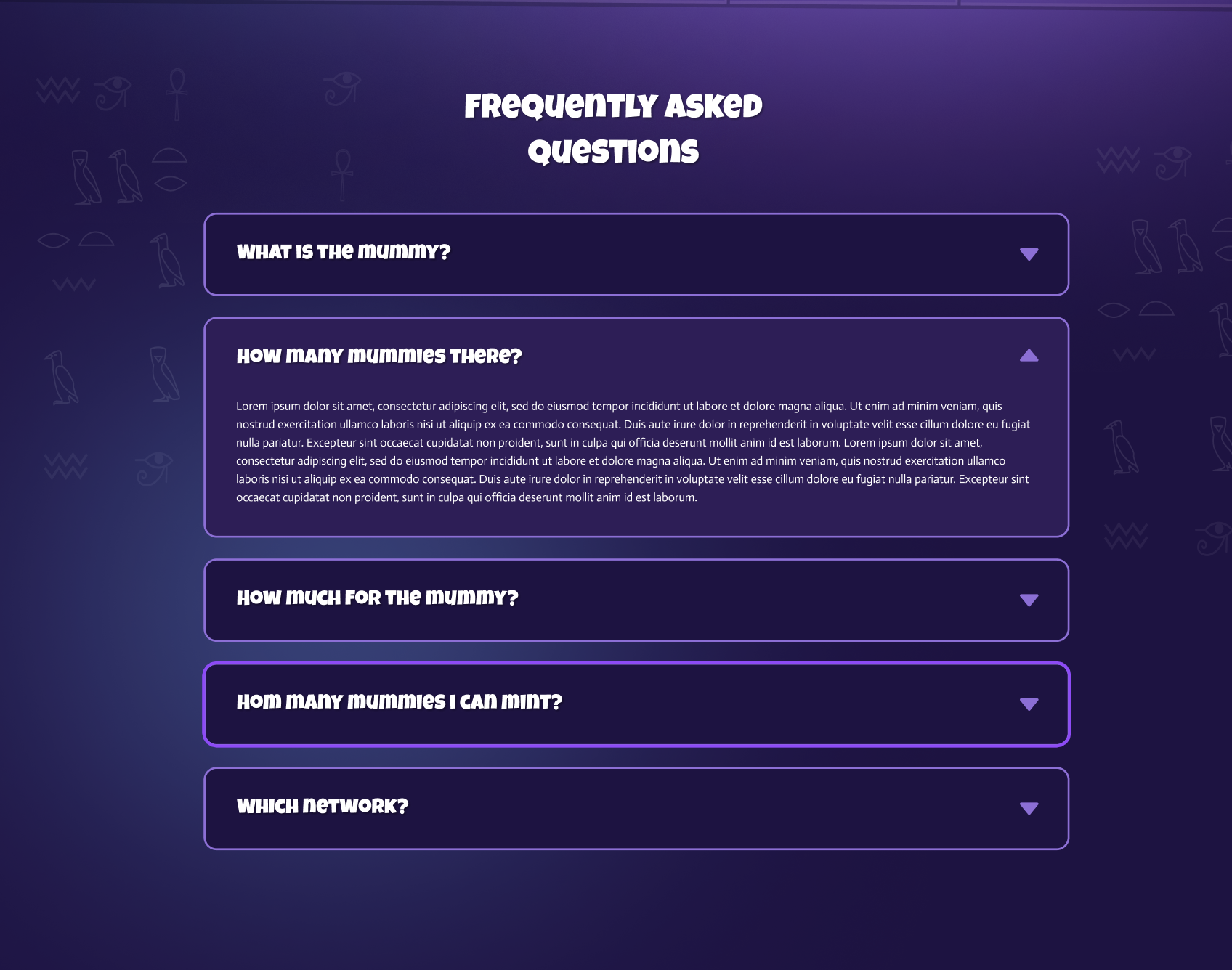
The FAQ answers the five questions every minter has — what, how many, how much, mint limit, network — in one expandable list, so the decision can be made on the page without leaving it.
Finished, mint-ready, never minted.
The collection was complete and the site was built — and then it didn't launch. The market the project was designed for cooled, the team's plans changed, and a 2021 mint that misses its moment doesn't really get a second one. I'm including it anyway, because the work is real: 5,555 characters generated from a trait system I designed and drew, wrapped in a brand and a page that were ready to go live.
What I'd carry forward
The lesson that stuck wasn't about NFTs — it was about systems. The fun part is drawing the king with the crown; the part that actually makes a collection work is the invisible layer logic that lets 75+ traits combine 5,555 ways without a single broken result. That's the same discipline I now bring to component libraries and design systems: design the parts and their rules so the combinations take care of themselves.
And the mint scene is the bit I'd take into any project — finding the one highest-intent moment in a flow and making it the most characterful thing on the screen, instead of the most generic.
Happy to walk through the trait system, the art process, or the page decisions — including why it never shipped — in a conversation.
Get in touch →Like what you see?
I'm open to senior product design roles and select freelance engagements. Always happy to chat.
Get in touch →